
The difference between SEO and Generative Engine Optimization (GEO)
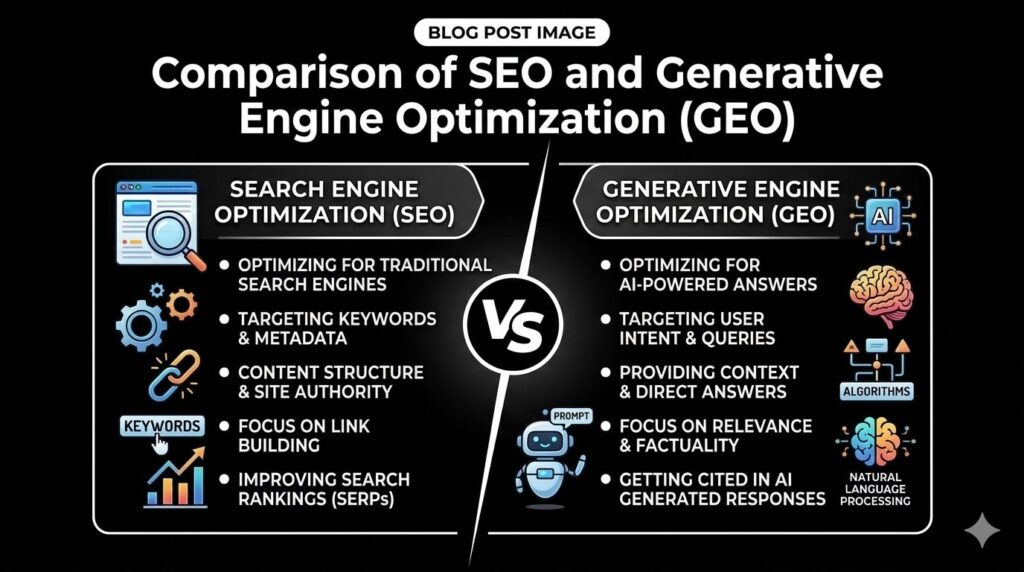
The difference between SEO and Generative Engine Optimization (GEO) Internet search is changing at a high rate. Search Engine Optimization (SEO) has been used over the years as the main tactic of increasing the visibility of search engine websites such as Google and Bing. Nevertheless, the current development of AI-based search engines and generative engines has introduced a new term, Generative Engine Optimization (GEO). Whereas SEO is concerned with prioritizing the websites on the traditional search results, GEO is intended to make the content visible and usable on the AI-generated responses that are generated by the tools such as ChatGPT and Google AI Overviews, and other generative search engines. The distinction between SEO and GEO is something that business people, marketers, and content creators should learn to stay afloat in the digital world. What Is Generative Engine Optimization (GEO)? Generative Engine Optimization (GEO) is a more modern idea that aims at optimizing content to the point that it is used by AI-based search engines and generative AI systems to give it as an answer. In contrast to the conventional search engines, which reveal a list of links, generative ones present direct answers or summits regarding the information across the Internet based on various sources. On the example of question a user poses to an AI system, like, What is the difference between SEO and GEO? then the system will provide a detailed answer by collecting and summarizing information on different sites. GEO will make sure your content is one of the sources that these AI systems will rely on. Key elements of GEO include: Well Organized and Understandable Content AI models like easy to comprehend content. Generative engines tend to utilize content, which contains clear headings, paragraphs that are well organized, and fashionable text. Authority and Expertise Generative engines put more emphasis on content that looks credible and authoritative. This implies that content must be knowledgeable and trustworthy. Contextual Information GEO does not simply pay attention to key words but gives priority to the full descriptions, circumstances and tips. Conversational Content Because most AI queries have been conversational (e.g., Explain SEO in simple terms), naturally answering questions content performs better. Data and Citations The content that is rich in statistics, facts, examples, and credible references is preferred by AI systems. The objective of GEO is to enable content to be accessible and visible in AI-generated responses and not to be ranked in the customary search results only. Important Differences of SEO and GEO Despite similar goals of SEO and GEO, the former and the latter do not work in the same way or target the same. Search Results Format SEO is interested in ranking the websites on the search engine result page that contains clickable links. GEO aims at rendering content as a part of AI-generated responses and reports. Optimization Strategy SEO is based on the significance of optimization of keywords, backlinks, and technical aspects. GEO gives emphasis on clarity of content and authority and depth of context. User Interaction Users in SEO are offered a link to navigate to a web site. In GEO, the user can get the answer without having to navigate to the original site and have the AI provide it to him/her. Content Structure SEO content will be search-intentionally and keyword-targeted. GEO content emphasizes more on a general response to questions in a conversational manner. Traffic Goals SEO is intended to attract organic traffic in a site. GEO pays more attention to the visibility in AI systems and brand recognition. Why the GEO Is Becoming Important The fast development of AI search engines is transforming the way individuals search the Internet. The presence of such tools as AI chat assistants and generative search engines is gaining momentum in search engines. Consequently, direct answers have become more popular as compared to visiting several sites among numerous users. suggests that traditional SEO might not be enough to be noticed. The companies that adjust to the GEO strategies will have a higher chance of staying visible in the AI-based search settings. The Future: GEO and SEO in Collaboration . GEO enhances SEO rather than replaces it.The websites still require powerful SEO basis to be indexed and relied upon by search engines. Nonetheless, a combination of SEO and GEO will guarantee that content will not only perform better in the conventional search results but will also excel within the AI-based responses. In order to succeed in the future of digital marketing, content creators must: Create low-quality content that is informative. Make sure your headlines and design are clear. Address the actual consumer inquiries. Create reputable and knowledgeable websites. Combining the two marketing techniques: SEO and GEO, any business organization can optimize its presence in both conventional search engines and the new AI-driven search solutions. Conclusion SEO and Generative Engine Optimization (GEO) are two phases of search technology development. SEO is about ranking sites in search engine results and GEO is about maximizing content in response to AI generated answers. With the ever-changing landscape of AI in the information search process, it will be necessary to merge the two models. Companies and content providers that realize and implement both SEO and GEO tactics will be more prominent in the new digital environment.